
Therapeutic Parenting in Residential Childcare (TPRCC)
Our Organisational Model
At ISM Psychological Services, we developed Therapeutic Parenting in Residential Childcare (TPRCC) to embed trauma-informed psychological practice into everyday residential care.
Children living in residential settings often present with complex developmental trauma, attachment disruption and risk-related behaviours. Traditional “one-hour therapy” models are not enough. Real change happens in the “other 23 hours” — in the everyday life-space where children live, learn and build relationships.
TPRCC translates forensic and clinical psychology into consistent daily practice across care, education and leadership teams.

Why Trauma-Informed Residential Care Matters
Research consistently shows that children who have experienced early adversity are at increased risk of:
- Mental health difficulties
- Offending behaviour
- Substance misuse
- Educational disengagement
- Poor adult outcomes
However, outcomes improve when children experience:
- Relational safety
- Consistency
- Emotionally regulated adults
- Developmentally informed care
- Opportunities to build agency and competence
TPRCC was designed to create an organisational secure base — for both children and staff.
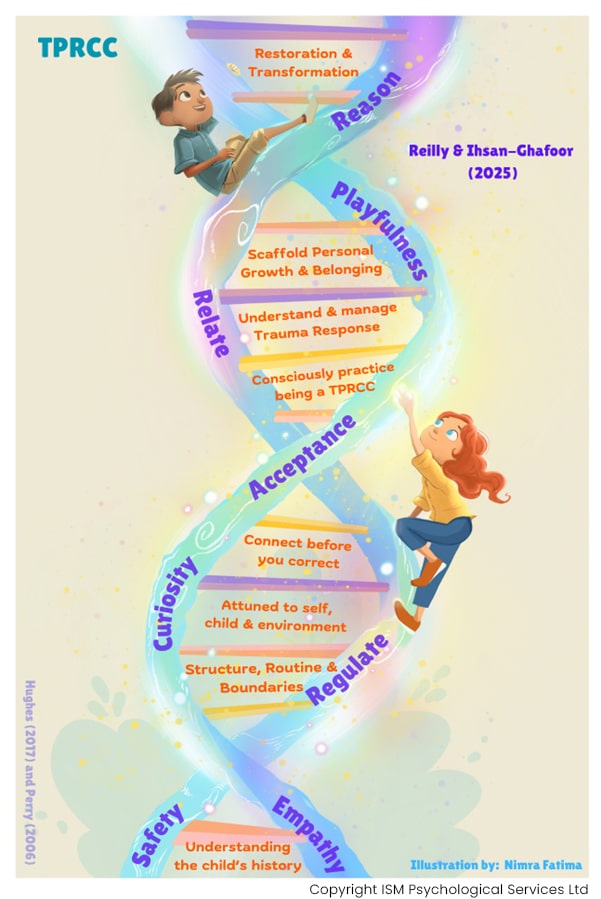
The Three-Tier Intervention Framework
TPRCC operates through a structured three-tier model, ensuring psychology supports the whole system as well as individual children.
Tier 1 – Universal / Capacity Building
Focus: Workforce development and trauma-informed culture
- Trauma-informed training
- Skills workshops
- Reflective practice
- Consultation with care, education and senior leaders
- Shared formulation and psychoeducation
Staff confidently apply therapeutic strategies in everyday interactions, promoting relational safety and consistency across the life-space.This tier ensures trauma-informed practice becomes part of the organisation’s DNA.
Tier 2 – Enhanced Psychological Input
Focus: Targeted child-centred assessment and intervention
- Psychological assessment
- Individual formulation
- Time-limited therapeutic interventions
- Integration into care and risk planning
- Multi-agency collaboration
Clear understanding of needs, strengths and risks. Improved care planning. Greater staff confidence in supporting complex presentations.
Tier 3 – Specialist Psychological Intervention
Focus: Complex or high-risk presentations
- Structured professional judgement risk assessment
- Trauma-focused and offence-focused interventions
- Specialist consultation to senior leadership
- Advanced staff training
Structured risk management. Improved safeguarding. Strengthened organisational expertise in managing high-need children.
A Forensic and Clinical Psychology Lens
Residential childcare operates within a legal and safeguarding framework. Children may be placed under Care Orders, Compulsory Supervision Orders or other statutory powers.
Forensic psychology is uniquely positioned to work at the intersection of:
- Structured professional judgement risk assessment
- Trauma-focused and offence-focused interventions
- Specialist consultation to senior leadership
- Advanced staff training
Our model incorporates principles of therapeutic jurisprudence — recognising that legal processes can impact psychological wellbeing and ensuring care environments promote development rather than reinforce adversity.


Workforce Development & Governance
Our psychology team includes:
- Head of Psychology
- Trainee Forensic Psychologists
- Assistant Psychologists
All work under structured supervision from HCPC-registered forensic practitioner psychologists.
The team contributes across four core professional roles:
- Assessment & intervention
- Research & evaluation
- Consultancy
- Training delivery
This ensures safe, ethical and evidence-informed practice at every level of the organisation.
Outcomes of the TPRCC Model
Embedding TPRCC across the organisation has supported:
- Improved relational safety
- Increased staff confidence and retention
- Stabilised placements
- Stronger safeguarding practices
- Consistent therapeutic language across teams
- Clear integration between care, education and psychology
By combining direct therapeutic work with organisational capacity building, psychology becomes a systemic resource, not just a service.
Service Boundaries
While experienced in working with complex trauma and risk-related behaviour, we work within our scope of competence. Where specialist neurodevelopmental or diagnostic assessment is required, we collaborate with appropriate external services.
Our Vision
TPRCC demonstrates how applied forensic and clinical psychology can move beyond the therapy room and shape whole organisations.
Our aim is to create psychologically informed environments where children feel safe, understood and supported — and where staff are equipped to provide consistent, therapeutic care across every hour of the day.